
Introduction
ON PAGE SEO This is a most important question ask by the many persons like content creater,ownwer,bsnessman etc whose busness are online presence. ON PAGE SEO It is a step to represent individual websetie page on high rank in search and attract more-more customers.Off page seo attract only limited customers as compare to on page SEO, which focuses on content and presence of your website.
At present time, it is important to understanding ON PAGE SEOand its essential for those who wants to increase website view and improve search engine ability .
If you want to improve your website and attract more and more customers, learning ON PAGE SEO…
What Is ON PAGE SEO?
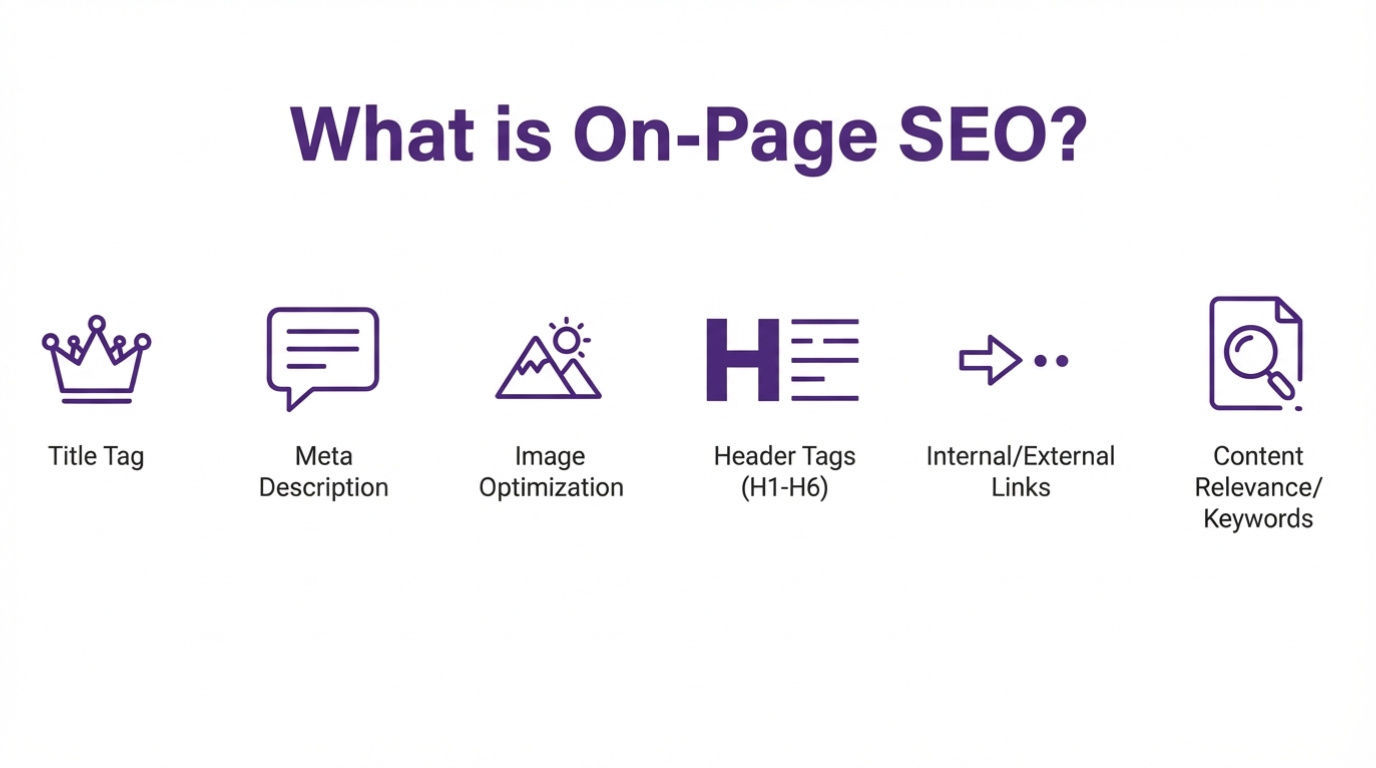
ON PAGE SEOOn-page SEO refers to the process of showing our web page on higher rank on the platform of search engine results pages (SERPs). It also includes title tags, meta descriptions, headers, URLs, images, internal links, technical aspects of a webpage and so on.
The objective of ON PAGE SEOis to help search engines to understand the content of your page while giving positive result and hight ranking.
On the other hand , off-page SEO, which only depends on external factors, while on-page SEO focuses on all aspects related to website .
Why Is ON PAGE SEO Important?
TO understand that ON PAGE SEOand it is important because it helps businesses and websites to visible at hight post.
Improves Search Rankings
A proper organised webpage has a better option of presence on the first page of Google.
Increases Traffic
When your pages rank higher, more people visit your website without any advertisement policy.
User Experience
A well-set and easy-to-read with proper images your website keeps attracts more customers .
Conversion Rates
Users are only interested and take action when the information is useful and well organized .
Key Elements of What Is ON PAGE SEO?
Many important facts that why on page SEO is helpful-
1. Keyword Research
Keyword research is the foundation of understanding ON PAGE SEOIt helps identify the words and phrases users type into search engines.
IT INCLUDES-
- Choosing relevant keywords.
- Using long-tail keywords.
- Studying competitors.
- Key words reputation
2. High-Quality Content
Content plays a major role in SEO success.
Good content should:
- Be informative.
- Answer user questions.
- Be unique and original.
- Include keywords naturally.
- Provide value to readers.
Search engines reward websites that publish quality content consistently.
3. Title Tags
Title tags are among the most important ranking factors.
A good title tag should:
- Include the primary keyword .
- Be under 60 characters .
- Encourage users to click .
Example:
ON PAGE SEOComplete Guide for Beginners
4. Meta Descriptions
Meta description is important and it choose any paragraph of the content and mostky choose on the first paragraph .
Tips includes :
- Use words between 150-160 .
- Include the target keyword .
- Write engaging descriptions .
5. URL Optimization
Use SEO friendly URL optimize description -
Good URL:
www.example.com/what-is-on-page-seo
Bad URL:
www.example.com/page?id=567
6. Header Tags
IMPORTANT INFORMATION ADD IN HEADER TAGS AND IMPROVE READABILITY .
Use:
- H1 for the title.
- H2 for major sections.
- H3 for other topics.
7. Image Generastion
Images improve engagement but should also be optimized.
Its includes :
- Compress image sizes.
- Use descriptive file names.
- Add alt text.
- Choose appropriate formats.
8. Internal connection
Internal links can connect with page of your website .
Benefits are :
- Better navigation.
- Improved indexing.
- Distribution of page authority.
9. External Linking
Also add external link to go return on the first page .
10. Mobile users
Most users browse on mobile devices.
A mobile-friendly website should:
- Load quickly.
- Be responsive.
- Have easy navigation.
Google prioritizes mobile-friendly websites in rankings.
Technical Aspects of What Is ON PAGE SEO?
Technical optimization is equally important.
Page Speed
Fast websites improve user satisfaction.
Ways to improve:
- Compress images.
- Minify CSS and JavaScript.
- Enable caching.
- Use quality hosting.
HTTPS Security
Secure websites are trusted more by users and search engines.
Installing SSL certificates protects user information.
Schema Markup
Schema helps search engines understand webpage content and can improve search result appearance.
Content Optimization
Content optimization is a major part of understanding What Is ON PAGE SEO?
Write for Users
Focus on solving problems and answering questions.
Use Keywords Naturally
Place keywords in:
- Title.
- Introduction.
- Headings.
- Content.
- Conclusion.
Update Content
Regular updates keep information relevant and improve rankings.
Common ON PAGE SEO Mistakes
Many website owners make avoidable errors.
Keyword Stuffing
Using the same keyword excessively reduces readability.
Duplicate Content
Always create original content.
Missing Meta Tags
Every page should have optimized titles and descriptions.
Slow Loading Pages
Visitors leave websites that load slowly.
Poor Internal Linking
A lack of internal links makes navigation difficult.
Ignoring Mobile Users
Mobile optimization is essential for modern SEO.
Best Practices
Follow these strategies:
- Research keywords.
- Publish quality content.
- Optimize title tags.
- Create compelling meta descriptions.
- Improve page speed.
- Optimize images.
- Build internal links.
- Make websites mobile-friendly.
- Use HTTPS.
- Update old content regularly.
- Focus on user experience.
Benefits for Businesses
Businesses using on-page SEO enjoy several advantages.
Better Visibility
Higher rankings improve brand awareness.
More Organic Traffic
SEO attracts visitors without ongoing advertising costs.
Higher Return on Investment
Organic traffic often provides long-term value.
Improved User Experience
Optimized websites encourage visitors to stay longer.
Competitive Advantage
Strong SEO helps businesses stand out from competitors.
Future of ON PAGE SEO
SEO continues to evolve with technology.
Future trends include:
- Artificial intelligence.
- Voice search.
- User intent optimization.
- Core Web Vitals.
- Mobile-first indexing.
- Structured data.
- High-quality content.
Websites that adapt to these changes are more likely to succeed.
Conclusion
ON PAGE SEO It is the practice of optimizing individual web pages to improve search engine rankings and enhance user experience. From keyword research and quality content to page speed, image optimization, mobile responsiveness, and internal linking, every element contributes to SEO success.
Understanding ON PAGE SEO helps businesses, bloggers, and website owners build a stronger online presence and attract targeted visitors. By implementing effective on-page SEO strategies, websites can achieve higher rankings, increased traffic, and better conversions.